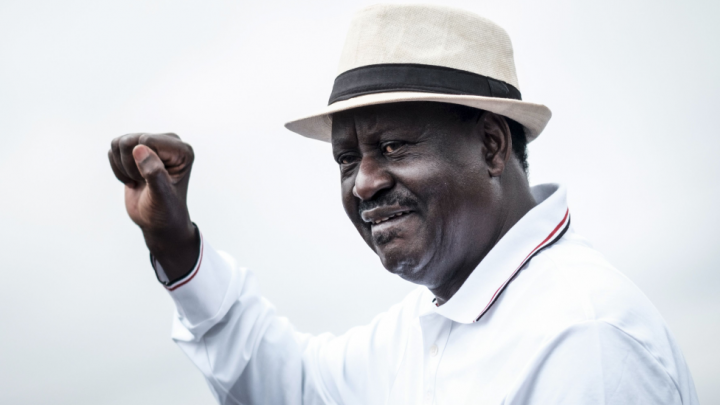
The East African political landscape is in mourning following the death of Raila Amolo Odinga, Kenya’s long time opposition leader and one of the region’s most influential statesmen. Odinga, who was 80 years old, passed away while receiving medical treatment in southern India.
According to reports from multiple media outlets, the former prime minister collapsed during a morning walk in Kerala, where he had been undergoing treatment at an Ayurvedic facility. He was rushed to a hospital in Koothattukulam but was pronounced dead on arrival. His body is being prepared for repatriation to Kenya as family members and government officials coordinate funeral arrangements.
A Lifetime of Political Struggle and Resilience
Born on January 7, 1945, in Maseno, Raila Odinga was the son of Jaramogi Oginga Odinga, Kenya’s first vice president after independence. From an early age, Raila inherited his father’s passion for politics and social justice.
Educated in East Germany, Raila returned home to Kenya and ventured into business before entering politics in the 1980s. Over the decades, he became synonymous with Kenya’s push for democracy, multiparty politics, and constitutional reform.
Odinga first joined Parliament in 1992 and went on to lead the Orange Democratic Movement (ODM), which became a major political force in Kenya. His political career was defined by both triumph and turmoil — marked by detentions, contested elections, and unwavering commitment to democratic ideals.
The Never-Ending Presidential Quest
Raila Odinga contested for Kenya’s presidency five times — in 1997, 2007, 2013, 2017, and 2022 — but never secured victory. Each time, he alleged electoral irregularities and called for transparency and reform.
His most dramatic political moment came after the disputed 2007 election, which plunged Kenya into post-election violence that claimed over 1,000 lives. The crisis led to a power-sharing agreement brokered by the African Union, under which Odinga became Kenya’s Prime Minister from 2008 to 2013.
During his tenure, he oversaw key governance reforms and contributed to the adoption of Kenya’s 2010 Constitution — a document that remains a cornerstone of the nation’s democratic progress.
Legacy Beyond Politics
Raila Odinga’s influence extended far beyond Kenya’s borders. A respected statesman across Africa, he played a central role in mediating regional conflicts and advocating for Pan-African unity.
Even in his later years, Odinga remained active in public service. Earlier in 2025, he was appointed as Kenya’s special envoy to South Sudan, where he worked to ease tensions between rival factions.
Known affectionately as “Baba” by his supporters, Odinga was more than just a politician — he was a symbol of resistance, reform, and resilience. To his critics, he was a stubborn political figure who refused to step aside. But to his admirers, he was the embodiment of Kenya’s democratic spirit.
A Nation in Mourning
News of Odinga’s passing has sent shockwaves throughout Kenya. Political leaders from across the spectrum — including President William Ruto and former President Uhuru Kenyatta — have expressed their condolences, describing Odinga as a patriot whose dedication to Kenya was unmatched.
In Nairobi, Kisumu, and across the country, thousands have gathered in vigils, singing freedom songs and waving orange flags in honor of the man who shaped decades of Kenyan politics.
State officials are expected to announce funeral arrangements soon, with discussions already underway about granting him a state funeral in recognition of his national and continental influence.
What His Death Means for Kenya
Raila Odinga’s death leaves a significant void in Kenya’s political and social landscape. As the face of the opposition for more than three decades, his absence raises key questions about who will step forward to lead the movement he built.
For many, his passing is not just the end of a political era, but a call for reflection on Kenya’s journey toward unity, justice, and democracy.
Final Reflections
Raila Odinga may never have achieved the presidency he sought for so long, but he will be remembered as one of Africa’s most determined voices for change. His courage, persistence, and belief in the power of the people made him a towering figure in Kenyan history.
As the sun sets on a lifetime of service, one thing remains certain — Raila Amolo Odinga’s legacy will live on in the hearts of millions who believed in his vision for a better Kenya.